 The Complete Guide to Choosing Walking Canes, Crutches, and Walking Sticks: Types, Sizing, and Safety Tips
Jul 21, 2026
The Complete Guide to Choosing Walking Canes, Crutches, and Walking Sticks: Types, Sizing, and Safety Tips
For millions of seniors and individuals recovering from injury or surgery, a walking cane, crutch, or walking stick is more than just a mobility aid — it is a tool that restores confidence, independence, and freedom of movement. But with so many types available, choosing the right one can be overwhelming.
This guide covers everything you need to know about walking canes, crutches, and walking sticks — including types, sizing, handle styles, materials, and safety tips — helping you find the perfect support device for your needs.
Why the Right Walking Aid Matters
Using the wrong walking aid — or one that is poorly fitted — can actually increase your risk of falling rather than reduce it. A properly selected and adjusted cane or crutch:
Reduces joint pain — Takes pressure off hips, knees, and ankles
Improves balance — Provides a third or fourth point of contact with the ground
Increases confidence — Makes walking feel safer, especially on uneven surfaces
Prevents falls — Offers stability when navigating stairs, curbs, and slippery floors
Supports recovery — Helps maintain mobility during rehabilitation after surgery or injury
Types of Walking Canes
Walking canes are the most common and least intrusive walking aids. They are ideal for individuals who need minimal support — primarily for balance rather than weight bearing.
Standard C-Cane
The classic single-point cane with a curved handle. It offers the lightest support and is best for users who only need occasional balance assistance.
Offset Cane
Features an angled handle that aligns the user's weight directly over the shaft. This provides better weight distribution and reduces hand strain.
Quad Cane
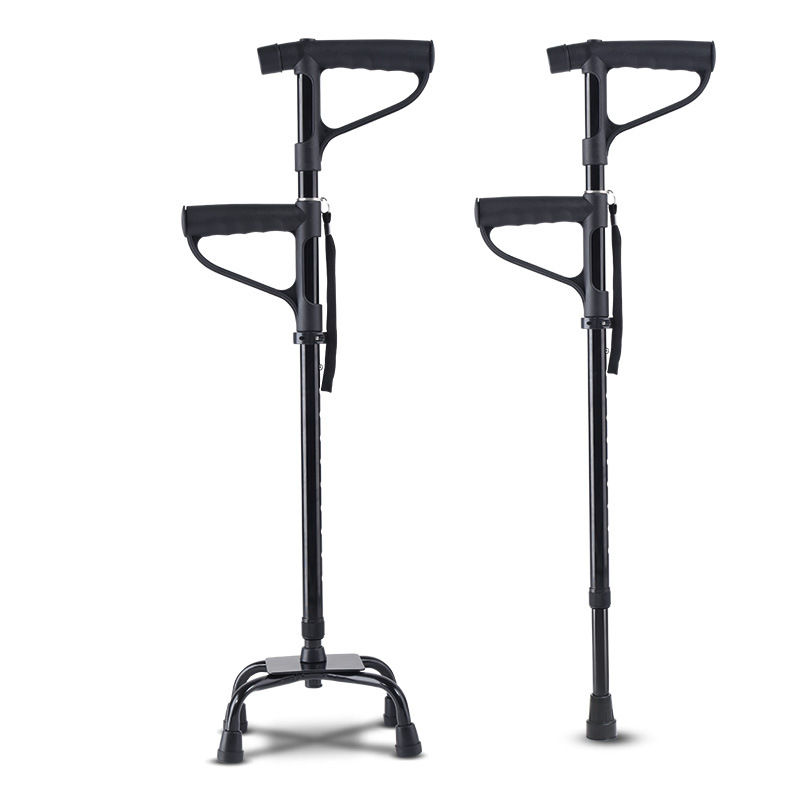
Has a four-point base for maximum stability. Unlike single-point canes, a quad cane can stand upright on its own and is recommended for users with more significant balance concerns.
Folding Cane
Designed for portability, folding canes collapse into sections for easy storage in a bag or purse. A lightweight elderly aluminum walking cane is an excellent choice for seniors who want reliable support without extra weight.
Types of Walking Sticks
Walking sticks differ from canes primarily in their straighter shaft and often more decorative design.
Standard Walking Stick
A straight shaft with a handle at the top and a rubber tip at the bottom. Available in wood, aluminum, and carbon fiber.
Telescopic Walking Stick
Adjustable in height, making it easy to fit multiple users or adapt to different footwear. A telescopic walking stick with comfortable handle is ideal for travel, as it can be shortened to fit in luggage.
Height Adjustable Walking Stick
Features a push-button mechanism that allows precise height adjustment in 1-inch increments. A height adjustable aluminum walking stick combines lightweight durability with easy customization.
Types of Crutches
Underarm (Axillary) Crutches
The most common type, placed under the armpits with handgrips at mid-height. Most often used for temporary injuries such as sprains, fractures, or post-surgery recovery.
Forearm (Lofstrand) Crutches
Feature a cuff that wraps around the forearm with a handgrip below. Often preferred by users who need long-term support.
Platform Crutches
Include a horizontal platform for the forearm to rest on instead of a handgrip. Designed for users with arthritis or hand injuries.
Handle Styles
Crook Handle — The classic curved handle. Traditional and familiar but can put pressure on the palm during extended use.
T-Handle — Straight handle shaped like a "T." Offers good grip but less comfortable for users with arthritis.
Ergonomic Handle — Contoured to fit the natural shape of the hand. Reduces pressure points and wrist strain.
Offset Handle — Positions the user's weight directly over the shaft. Maximizes weight-bearing support and reduces hand fatigue.
Swivel Handle — Rotates to adapt to the user's natural walking motion, reducing wrist strain.
Materials
Aluminum — Lightweight, durable, and rust-resistant. The most common material for canes and walking sticks.
Wood — Classic appearance with natural shock absorption. Heavier than aluminum but preferred for its traditional look.
Carbon Fiber — Ultralight and extremely strong. The lightest option available, but also the most expensive.
How to Choose the Right Height
Proper sizing is critical for safe and comfortable use of any walking aid.
For Canes and Walking Sticks:
1. Stand upright wearing your normal walking shoes
2. Let your arms hang naturally at your sides
3. The top of the cane should align with the crease of your wrist
4. When holding the cane, your elbow should be bent at approximately 15-20 degrees
Most adjustable canes fit heights from approximately 5'0" to 6'4".
For Crutches:
- Underarm crutches — The top should sit 1-2 inches below your armpit. The handgrip should align with your wrist crease.
- Forearm crutches — The cuff should sit approximately 1 inch below the back of your elbow.
Which Hand Should You Use?
A common misconception is that a cane should be held in the hand opposite the injured leg. In fact, holding the cane in the hand opposite the weak or painful leg is the most biomechanically efficient way to walk. This distributes weight evenly across the body and reduces stress on the affected joint.
Safety Tips
Check the rubber tip (ferrule) regularly — Replace when worn down to ensure traction
Keep the cane or crutch clean — Wipe down the shaft and handle weekly
Inspect for damage — Look for cracks, bends, or loose hardware
Replace worn handgrips — Ensure a secure, comfortable grip at all times
Use on dry surfaces when possible — Be extra cautious on wet or icy ground
Store properly — Keep in a dry place when not in use to prevent corrosion
Consider ice tips — For winter walking, attach ice-pick tips for traction on snow and ice
Conclusion
Choosing the right walking cane, crutch, or walking stick depends on your specific needs — the level of support required, how often you will use it, and your personal comfort preferences. A single-point cane offers the lightest support and is ideal for balance, while a quad cane or crutches provide more substantial weight-bearing support.
Take the time to get the correct height measurement, choose a handle style that feels comfortable in your hand, and select a material that matches your lifestyle. The right walking aid can make a meaningful difference in your daily mobility, confidence, and quality of life.
Read More
 English
 русский
 한국의
한국의



 IPv6 network supported


