The Complete Guide to Shower Chairs and Bath Seats: Choosing the Right Bathroom Safety Seat for Seniors and Caregivers
September 16, 2026
The Complete Guide to Shower Chairs and Bath Seats: Choosing the Right Bathroom Safety Seat for Seniors and Caregivers
Bathrooms are the most dangerous room in the house. Wet tile, hard edges, and the step over a tub wall turn a simple shower into the place where older adults most often fall. For anyone with limited balance, arthritis, or a recent surgery, standing to wash is the riskiest part of the day — and it is also the easiest part to fix.
A shower chair, shower stool, or bath bench gives the bather a stable place to sit, keeps both hands free, and removes the balance challenge completely. This guide explains how shower chairs, shower stools, tub benches, swivel seats, and shower commode chairs differ, and how to choose the right type, size, material, and weight rating for your bathroom.
HOT TOPICS
#ShowerChairGuide#BathSeatBuyingGuide#BathroomSafety#SeniorFallPrevention#BathroomAccessibility1Why Bathroom Seating Changes EverythingHOT#BathroomSeatingBasics
A seated shower removes the single riskiest movement in the house: standing on a wet, slippery floor while your eyes are closed and your hands are busy. A waterproof shower seat for the elderly gives the bather a fixed place to sit, which means less fatigue and far less chance of a slip.
Seating also makes bathing easier for the caregiver. It lowers the reach needed to help with the back, feet, and hair, and keeps the bather at a comfortable working height instead of standing over them.
- ●Limited balance or dizziness — anyone who feels unsteady on wet tile, even occasionally.
- ●Arthritis or joint pain — a seat removes the need to stand and balance through a whole shower.
- ●Post-surgery recovery — hip, knee, and back operations make standing in a shower risky for weeks.
- ●Caregivers — a seated bather is easier and safer to assist, and easier to reach.
2Shower Chair vs Shower Stool vs Bath BenchHOT#ShowerChairVsBathBench
These three names are often used interchangeably, but they solve different bathroom layouts.
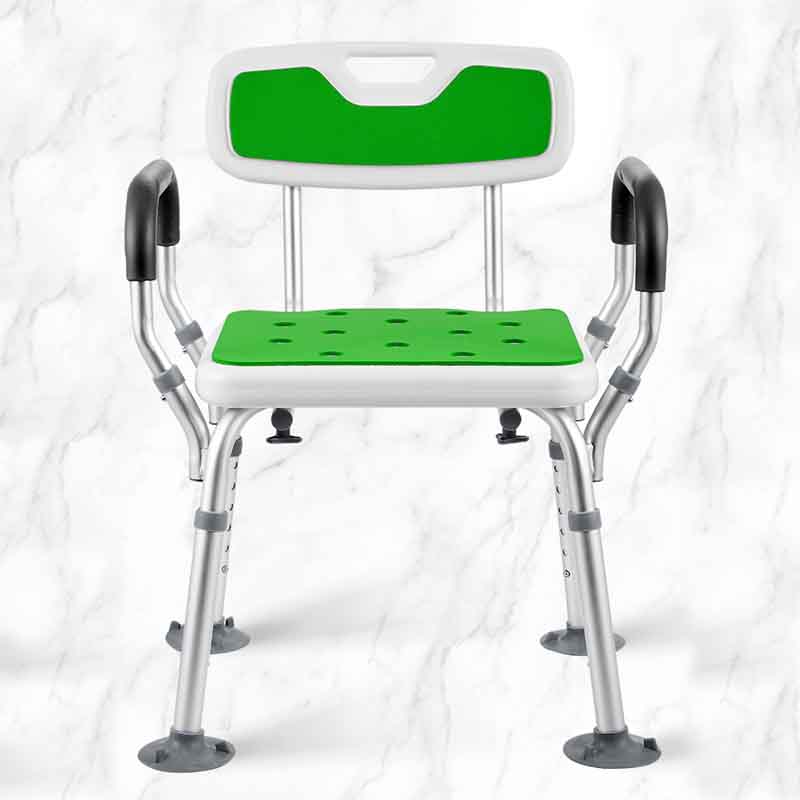
- ●Shower chair — a seat with a backrest, and often armrests, that stands on the floor of the shower or tub. Best for anyone who tires easily or needs back support while washing.
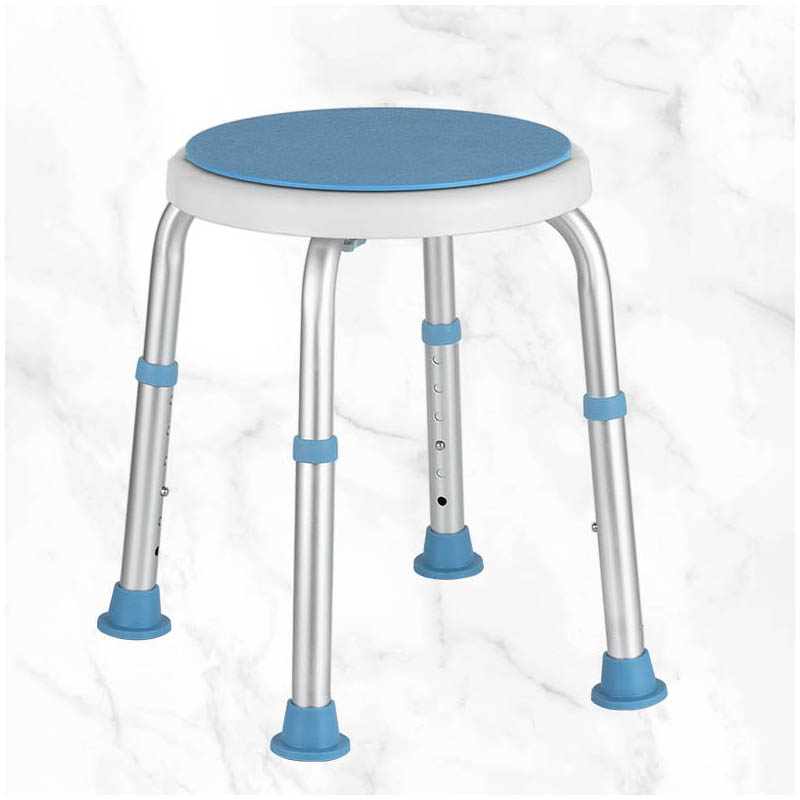
- ●Shower stool — a backless, height adjustable stool on a compact footprint. Best for small stalls where a full chair will not fit, or for users who only need somewhere to rest.
- ●Bath bench / tub bench — a wider seat that spans both tub walls so the bather sits outside the tub and swings their legs over. Best for a standard bathtub, because it removes the step-in entirely.
If the bathroom has a walk-in shower, start with a chair or stool. If it has a tub, a bath bench or transfer bench is usually the safer choice.
3Sizing: Seat Height, Width, and Weight CapacityHOT#ShowerChairSizing
Three numbers decide whether a seat is comfortable or useless:
- ●Seat height — feet should rest flat on the floor with hips and knees roughly level, usually 17 to 19 inches. An adjustable-height chair lets you fine-tune this, and taller legs suit users who struggle to rise from a low seat.
- ●Seat width and depth — wide enough to sit down without aiming, shallow enough that the backrest still supports the lumbar area. Check that the chair clears the shower door swing and any existing grab bars.
- ●Weight capacity — choose a rating above the heaviest expected user with a clear margin, and check that the frame and feet are rated together, not just the seat.
- ●Shower floor and drain — check the base leaves the drain clear so water does not pool around the feet.
4Stability: Non-Slip Feet, Arms, and Weight Distribution#ShowerSeatStability
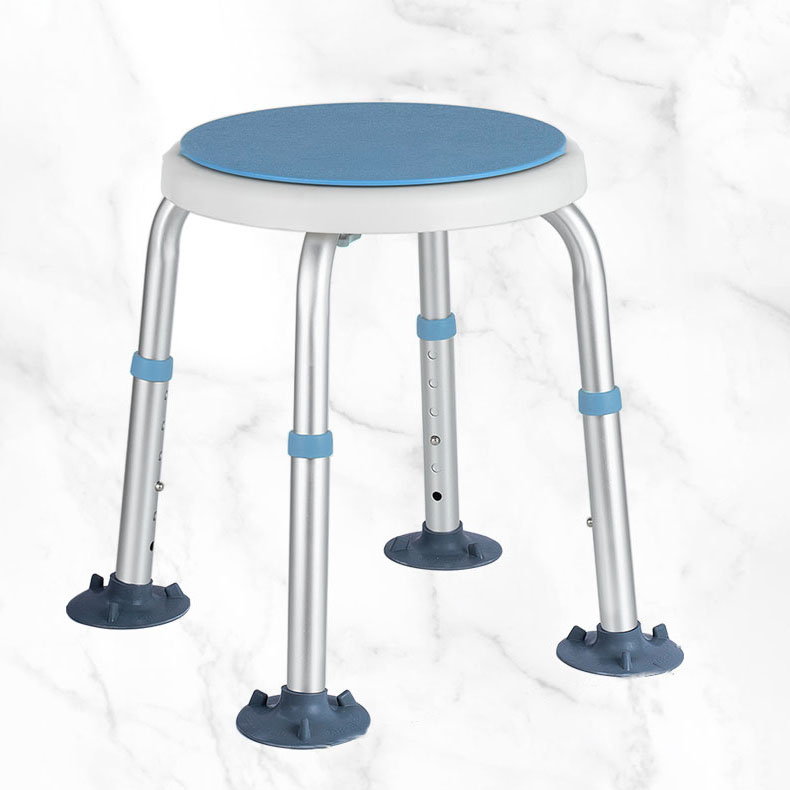
Stability comes from the base, not the seat. Look for wide rubber tips with a large contact area, a low seat height, and splayed legs that keep the center of gravity inside the footprint. On textured tile, plain rubber feet grip best; on smooth acrylic shower pans, angled anti-slip tips resist sliding sideways. A heavy duty non slip bath seat is built with thicker aluminum tubing and a wider base to suit heavier users.
- ●Arms help a user push up to standing or lower themselves down gradually, and stop a sideways shift while washing.
- ●Backrest keeps the trunk supported so the user is not balancing while reaching for shampoo.
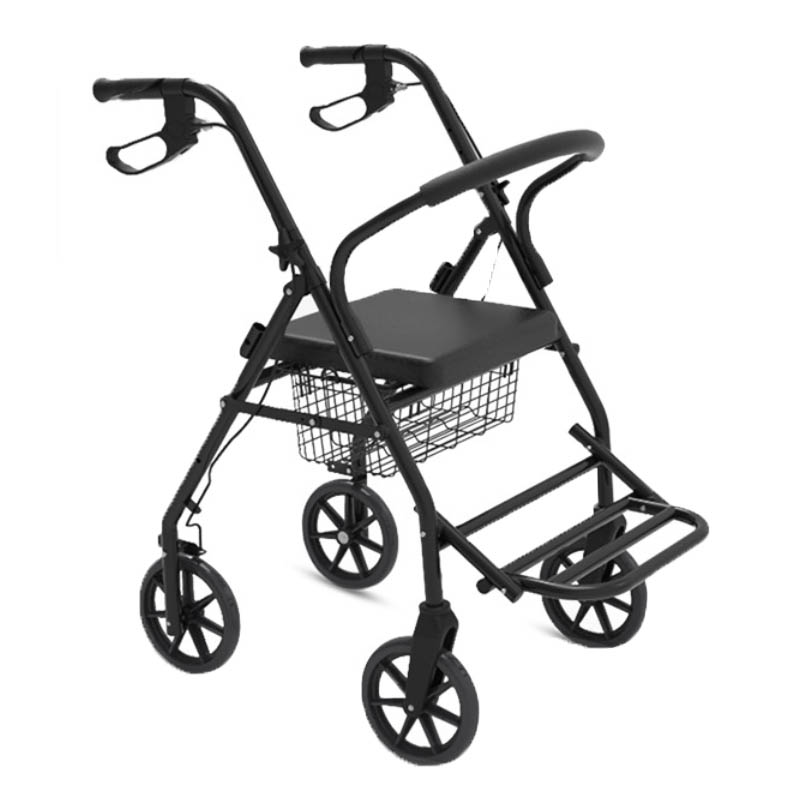
- ●No wheels in the shower — fixed feet only. Rolling seats belong outside the wet zone.
Check the feet every week. A worn, rock-hard rubber tip is the most common reason a stable shower seat becomes a slippery one.
5Materials and Draining: Aluminum, Plastic, and Waterproof Pads#ShowerChairMaterials
Bathroom seating lives in constant moisture, so material choice decides how long it lasts.
- ●Aluminum frames resist rust and stay light enough to lift in and out of the tub. A rust-proof frame is the single most important material choice.
- ●Molded plastic seats are easy to clean but can become slick; choose a textured surface or one with drainage holes.
- ●Padded seats are comfortable for long showers but must be fully waterproof — a closed-cell pad that sheds water instead of soaking it.
- ●Drainage matters more than padding for comfort. Holes or channels let water pass through instead of pooling under the user.
6Swivel and Rotating Seats for Limited Mobility#SwivelShowerChair
A user who cannot step over a tub wall safely can still bathe with a rotating seat. The technique with a comfortable non slip swivel shower chair is simple: sit down on the seat while it faces out of the tub, then rotate the seat inward. Getting out reverses the motion, so the user never has to twist their torso or lift a leg over the wall.
Swivel seats are especially useful after hip or knee replacement, for users with limited range of motion, and for anyone whose caregiver is assisting a transfer. Look for a locking pin so the seat can be fixed in position during washing, and a textured surface so the user does not slide while rotating.
- ●Locking pin — so the seat can be fixed in position while washing.
- ●Textured surface — so the user does not slide while the seat turns.
- ●Matching height — the seat should meet the tub edge level for a smooth transfer.
7Shower Commode Chairs: Bathing and Toileting in One#ShowerCommodeChair
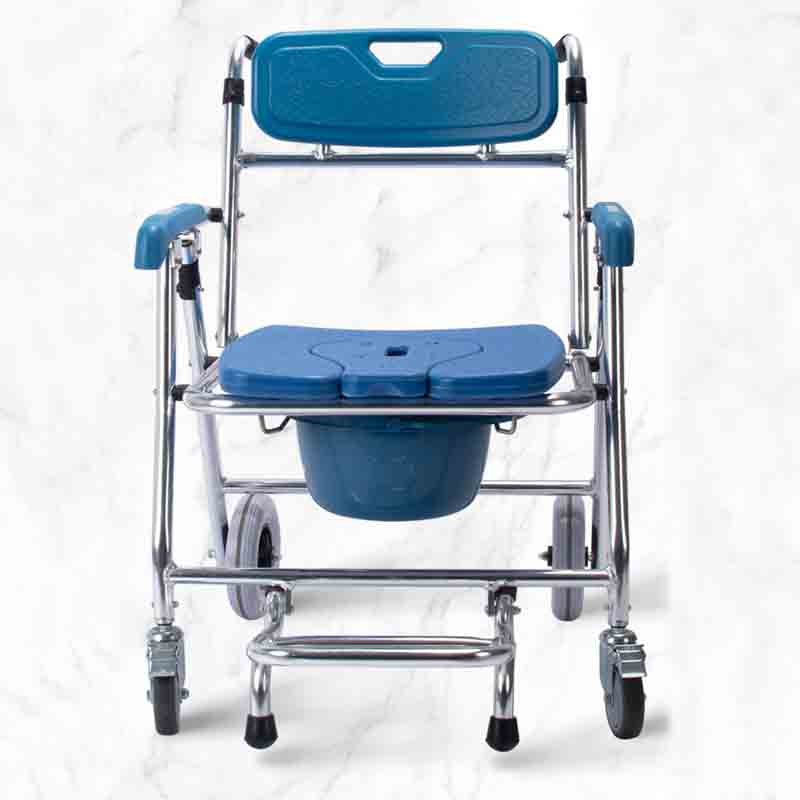
When a user needs help with both bathing and toileting, one piece of equipment is often better than two. A shower commode chair has an opening in the seat so it can be used over a toilet or as a standalone commode, while remaining waterproof and rollable into the shower.
An aluminum shower commode chair for elderly users is a practical choice in a care home or family bathroom because it rolls from bedside to bathroom without a transfer. Where the bathroom is narrow, a shower commode chair for over toilet parks directly over the existing toilet and can be moved aside when guests visit.
Lock the casters before any transfer, and never leave a user seated in a wheeled commode chair unattended.
- ●Locking casters — every wheel should lock before a transfer is attempted.
- ●Seat opening size — wide enough for hygiene access, narrow enough to sit securely.
- ●Removable pan — lets the same chair be used as a standalone bedside commode.
8Setup, Cleaning, and Care Checklist#BathroomSeatCare
- 1Rinse the frame and seat with warm water after every use, then dry the rubber feet — soap film is what makes feet slide.
- 2Check the leg screws and push-button height pins once a month and tighten anything loose.
- 3Inspect the rubber tips for hardening, cracks, or wear and replace them as soon as the grip feels smooth.
- 4Use a mild bathroom cleaner only; bleach and abrasive powders dull plastic and dry out rubber.
- 5Confirm the seat is fully latched at the chosen height before every use — a half-engaged pin can drop mid-shower.
- 6Re-check the seat height and tighten all fittings again after the first week — they settle once the chair has been sat on repeatedly.
★Final Takeaway#BathroomSafetyGuide
Bathroom seating is one of the least expensive and highest-impact safety upgrades a household can make. Match the type to the room — a chair or stool for a walk-in shower, a bath bench for a tub, a swivel seat for limited mobility, and a commode chair when toileting support is also needed — then get the height, width, and weight rating right. A removable bath bench or lightweight seniors folding shower chair stores flat when the bathroom is shared.
Set it up once, check the feet and pins regularly, and the riskiest room in the house becomes the easiest one to use.
Start with the room rather than the product: measure your shower or tub, decide whether you need a chair, a bench, or a commode chair, and only then compare models on seat height, width, and weight rating.
- ●Seat height 17–19 in — feet flat on the floor, hips and knees level.
- ●Fixed feet only — no wheels inside the wet zone.
- ●Weekly check — rubber tips, leg screws, and height pins.
 English
 русский
 한국의






 IPv6 network supported


