 The Complete Guide to Bathroom Safety for Seniors: Shower Chairs, Grab Bars, Raised Toilet Seats, and Essential Mobility Aids
Jul 08, 2026
The Complete Guide to Bathroom Safety for Seniors: Shower Chairs, Grab Bars, Raised Toilet Seats, and Essential Mobility Aids
The bathroom is one of the most hazardous rooms in the home for seniors and individuals with limited mobility. Wet floors, hard surfaces, and confined spaces create a perfect storm for slips and falls. According to the CDC, approximately 80% of falls in the home occur in the bathroom. The good news is that with the right safety equipment, most bathroom accidents are entirely preventable.
This guide covers everything you need to know about bathroom safety — from shower chairs and grab bars to raised toilet seats and transfer benches — helping you create a safe, accessible bathroom for yourself or a loved one.
Why Bathroom Safety Matters
Bathrooms present unique challenges for seniors and people with mobility limitations:
Wet and slippery surfaces — Water and soap create hazardous conditions on tile, vinyl, and fiberglass floors
Confined spaces — Limited room makes maneuvering with walkers or wheelchairs difficult
Frequent transitions — Getting in and out of the shower, on and off the toilet, and standing from a seated position all require balance and strength
Hard surfaces — Falls in the bathroom are more likely to cause serious injury due to porcelain fixtures, tile floors, and sharp corners
A well-equipped bathroom with proper safety aids can dramatically reduce fall risk and help seniors maintain independence in their daily routines.
Shower Chairs and Bath Seats
A shower chair is often the first piece of bathroom safety equipment families consider — and for good reason. Sitting while bathing eliminates the risk of falling on a wet shower floor and conserves energy for those who tire easily.
Types of Shower Chairs
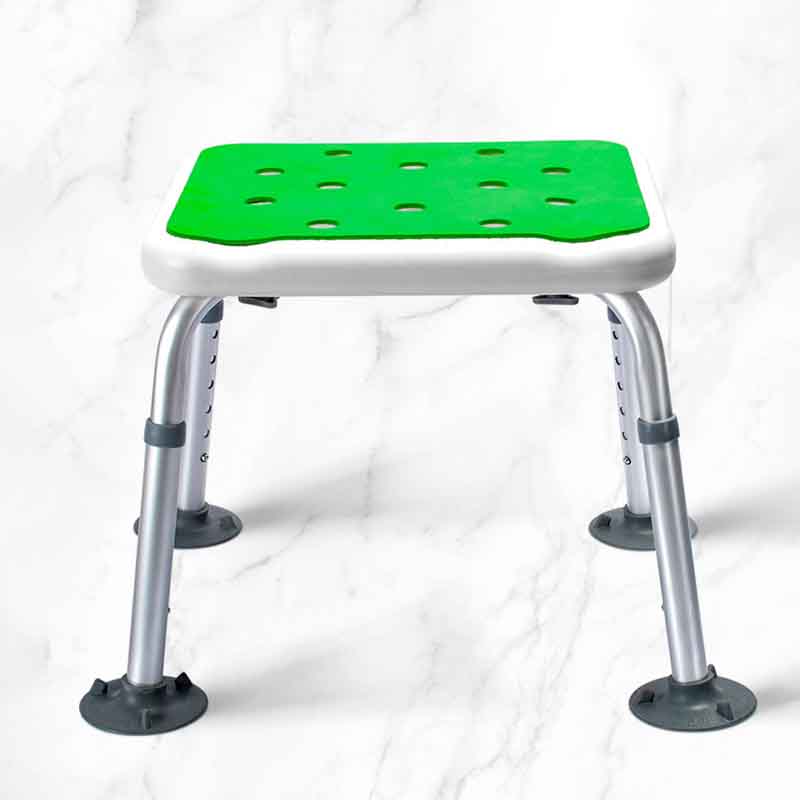
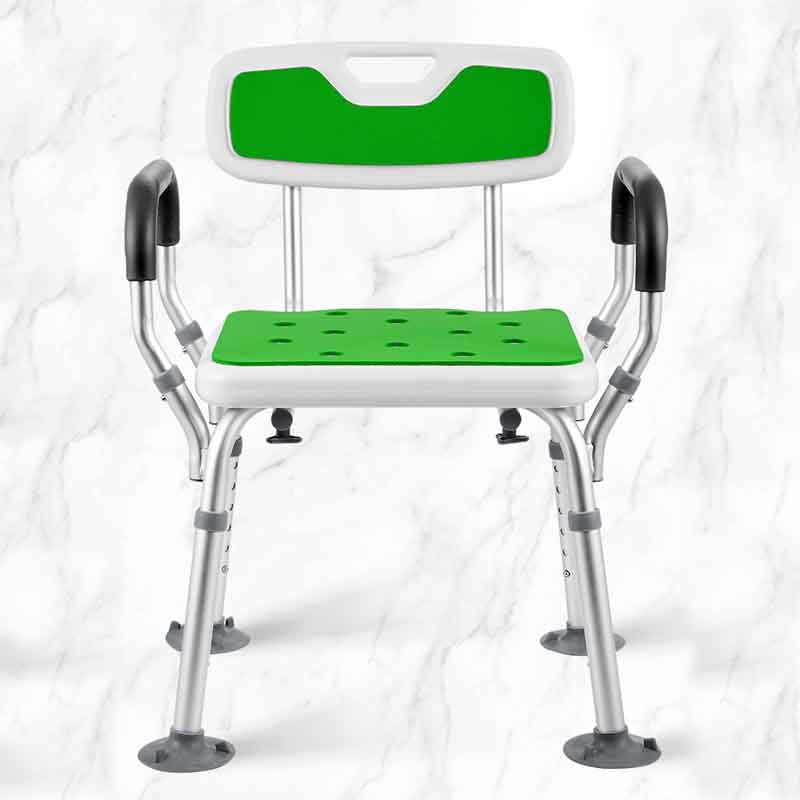
Standard Shower Chairs — The most common option, featuring four legs with non-slip rubber tips and a plastic or aluminum seat. These are lightweight, affordable, and suitable for most users. A bathroom safety shower bench chair provides the stability needed for confident showering.
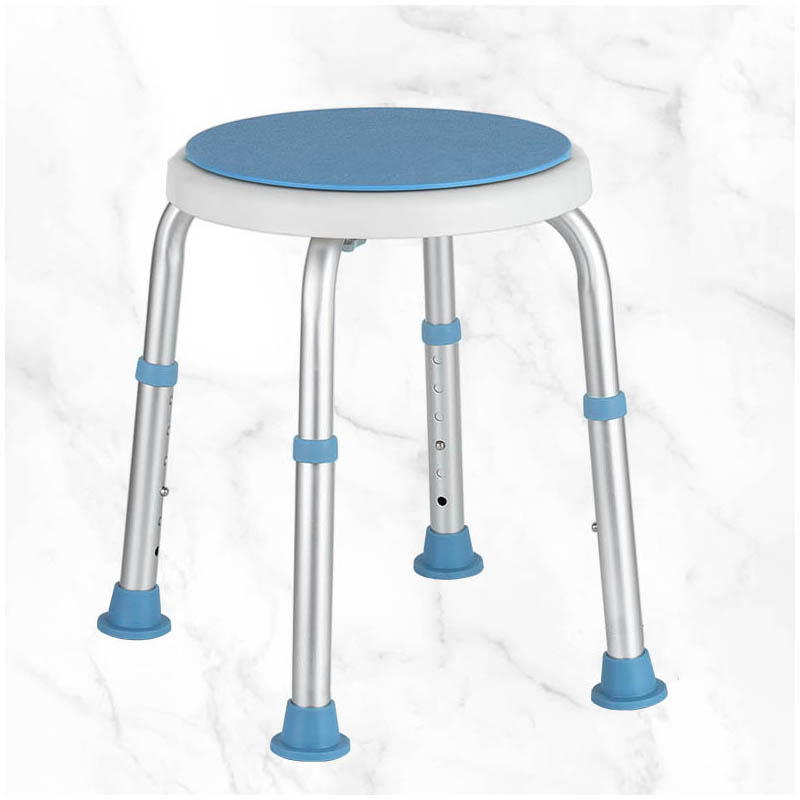
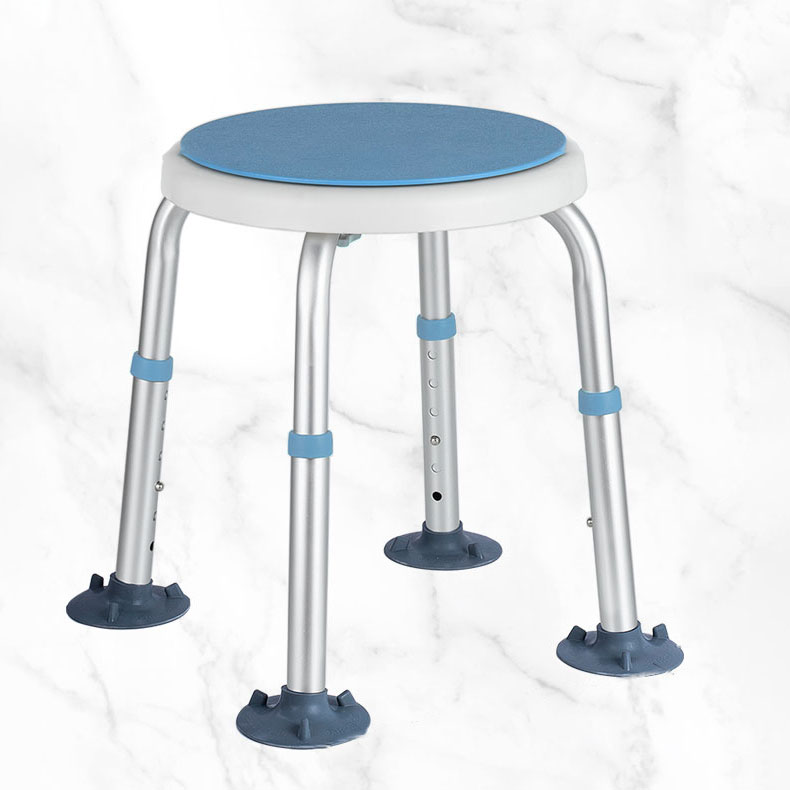
Swivel Shower Chairs — These include a rotating seat that makes it easier for users to enter and exit the shower. The swivel mechanism allows the user to sit on the chair outside the shower, then rotate their legs into the shower area. A comfortable non slip swivel shower chair is ideal for caregivers assisting with transfers.
Folding Shower Chairs — Designed for easy storage and portability. A health folding bathroom shower chair can be hung on a wall hook when not in use, keeping the shower floor clear.
Bath Benches — These are longer seats that span the width of the bathtub, allowing the user to sit on the bench, swing their legs over the tub wall, and slide into position. A height adjustable bath bench stool is an excellent choice for users who prefer a wider, more stable seating surface.
Transfer Benches — Half of the bench sits outside the tub and half inside, allowing the user to sit on the dry outer section first, then slide inward. This eliminates the need to step over the tub wall entirely.
Key Features to Consider
Weight capacity — Standard chairs support 250-350 lbs; heavy-duty models support up to 500 lbs
Seat height adjustability — Legs that adjust from 14 to 20 inches accommodate users of different heights
Non-slip feet — Look for suction cup feet or rubber tips that grip the shower floor securely
Backrest — Provides additional support and security, especially for users with limited trunk control
Armrests — Help with sitting and standing by providing leverage points
Tool-free assembly — Makes installation and height adjustment simple
Drainage holes — Prevent water pooling on the seat surface
Who Benefits from a Shower Chair
Seniors with reduced balance or strength
Individuals recovering from hip, knee, or back surgery
People with arthritis, Parkinson's disease, or multiple sclerosis
Caregivers who need to assist with bathing
Anyone who feels unsteady standing in the shower
A medical swivel aluminum bath chair combines the corrosion resistance of aluminum with the convenience of a rotating seat, making transfers smoother for both user and caregiver.
Grab Bars and Safety Rails
Grab bars provide secure handholds for entering and exiting the shower, getting on and off the toilet, and navigating the bathroom safely. Unlike towel bars or soap dishes that are not designed to bear weight, properly installed grab bars are anchored into wall studs or reinforced backing and can support hundreds of pounds.
Where to Install Grab Bars
Inside the shower — On the wall opposite the shower controls, and on the side wall for leaning support
At the shower entrance — One vertical bar or a combination of vertical and horizontal bars to help with stepping over the tub wall
Next to the toilet — On the side wall and/or in front, positioned to assist with sitting and standing
Near the bathroom entrance — For steadying during transitions
Inside a walk-in shower — Along the entry and at the shampoo niche area
Types of Grab Bars
Straight Bars — Simple and effective. Available in lengths from 12 to 36 inches. Standard diameter is 1.25 inches for optimal grip.
Angled or Curved Bars — Provide multiple grip positions and can fit corner installations. Ideal for small spaces.
Suction Cup Grab Bars — Temporary solutions for travel or rental homes. Not as secure as permanently mounted bars — never rely on suction bars for full weight support.
Toilet Safety Rails — Freestanding or wall-mounted rails that frame the toilet, providing armrests for sitting and standing. These are especially helpful for users who need leverage but don't want to install multiple grab bars.
Installation Tips
Install grab bars at a height of 33-36 inches from the floor (toilet area) or 34-38 inches (shower area)
Always mount into wall studs or use heavy-duty toggle bolts for hollow wall anchors
Use stainless steel or brass bars for rust resistance in wet environments
Hire a professional installer if you're unsure about wall construction
Raised Toilet Seats and Commode Chairs
Toileting is one of the most physically demanding bathroom tasks for seniors and people with limited mobility. Standard toilet heights (14-15 inches) require significant knee and hip flexion to sit down and stand up. A raised toilet seat or commode chair addresses this by increasing seat height and providing arm support.
Raised Toilet Seats
A raised toilet seat fits over your existing toilet bowl, increasing seat height by 2 to 4 inches. This reduces the distance you need to lower and raise your body, making sitting and standing easier and safer.
Standard raised seats — Add approximately 2 inches of height
Extra-tall raised seats — Add 3.5 to 4 inches, ideal for taller users or those with hip or knee limitations
Hinged models — Flip up for easy cleaning and allow the regular toilet seat to be used
Bedside Commode Chairs
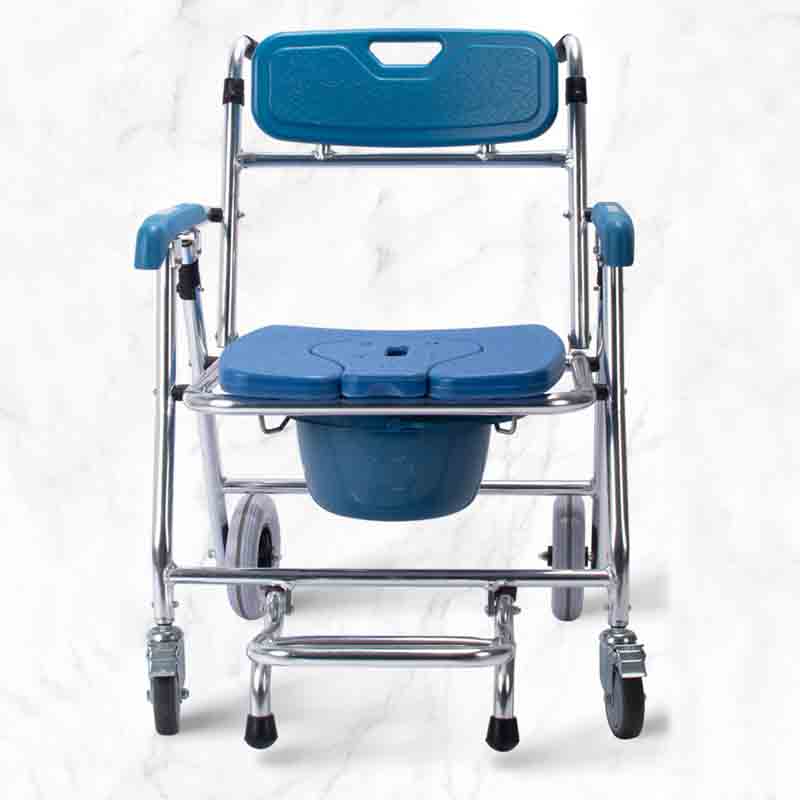
A commode chair serves dual purposes — it can be placed over a toilet as a raised toilet seat with armrests, or used as a standalone bedside toilet with a removable bucket. Commode Toilet Chairs for Handicapped and Seniors are especially useful for:
Post-surgery recovery when reaching the bathroom is difficult
Nighttime use for seniors with frequent bathroom trips
Travel and camping where bathroom access is limited
Care situations where the user cannot easily transfer to a standard toilet
Features of a Good Commode Chair
Tool-free height adjustment — Legs should adjust in 1-inch increments from 17 to 22 inches
Padded seat — Increases comfort for extended sitting
Removable bucket with splash guard — Makes emptying cleaner and easier
Drop-front pail cover — Accessible without removing the entire bucket
Flip-up or removable armrests — Facilitates side transfers
Over-toilet positioning — Wheel clearance that fits around standard toilets
Lightweight aluminum frame — Easier to move and reposition than steel frames
A medical bedside commode shower chair with wheels combines toileting, showering, and mobility in one versatile unit, ideal for users who need assistance in multiple settings. A shower commode chair for over toilet works well for users who want a single solution for both showering and toileting.
Bathroom Safety Mats and Non-Slip Solutions
Beyond major equipment, small additions make a big difference in bathroom safety:
Non-Slip Mats — Place adhesive non-slip strips or mats inside the shower or bathtub. These provide traction underfoot even when wet.
Bathroom Floor Mats — Place absorbent, non-slip mats on the floor outside the shower and in front of the sink and toilet. Choose mats with a rubber backing that grips the floor.
Shower Caddies and Organizers — Keep soaps, shampoos, and other essentials within easy reach to avoid bending or stretching.
Night Lights — Plug-in night lights illuminate the path to the bathroom for nighttime trips.
How to Create a Comprehensive Bathroom Safety Plan
Step 1: Assess the Bathroom
- Measure door width to ensure wheelchair or walker clearance (minimum 32 inches)
- Check floor surfaces — are they non-slip when wet?
- Evaluate grab bar placement near shower, toilet, and entry
- Measure toilet height (standard 14-15 inches)
- Measure shower or tub step-over height
Step 2: Prioritize Equipment Needs
- Essential — Shower chair or bench, grab bars near toilet and shower, non-slip mats
- Important — Raised toilet seat, handheld showerhead, toilet safety rails
- Consider — Transfer bench, bedside commode, shower stool with backrest
Step 3: Install and Configure
- Have grab bars professionally installed into wall studs
- Adjust shower chair legs so the user sits with feet flat on the floor and knees at 90 degrees
- Position raised toilet seat so the user can stand with minimal effort
- Set up the commode chair in the bedroom if needed for nighttime use
Step 4: Educate Caregivers and Users
- Demonstrate how to use grab bars correctly
- Practice transfers with the shower chair or transfer bench
- Review emergency procedures — ensure someone checks on the user during bathing
Maintenance Tips
Clean equipment weekly — Use mild soap and water. Avoid harsh chemicals that can degrade plastic or rubber components.
Check rubber tips and suction cups — Replace if worn or cracked to prevent slipping.
Tighten bolts and screws — Monthly inspection prevents loosening over time.
Inspect grab bar anchors — Confirm bars are still securely mounted to wall studs.
Replace non-slip mats annually — Traction wears down with use and cleaning.
Lubricate swivel mechanisms — Keep rotating seats smooth and quiet.
Conclusion
Creating a safe bathroom environment is one of the most impactful steps you can take to protect seniors and individuals with mobility challenges. By combining a stable shower chair, securely mounted grab bars, a raised toilet seat or commode chair, and non-slip surfaces, you can dramatically reduce fall risk while preserving dignity and independence.
Start with the most critical items — a quality shower chair and grab bars — and build from there based on the user's specific needs. Every piece of bathroom safety equipment is an investment in confidence, safety, and quality of life.
Read More
 English
 русский
 한국의
한국의





 IPv6 network supported


